
Namibia-Finland Business Partnership: Your Gateway to Growth & Preferential Markets in Africa and Beyond
Namibia is entering a decisive growth phase, anchored in political stability, strong institutions and a clear long-term development vision. For Finnish companies seeking reliable partnerships and future-proof investment destinations, Namibia offers a rare combination: policy certainty, preferential market access, sustainability leadership and practical project pipelines in energy, logistics, agriculture, tourism, digital services and value-added production among others.
Economic outlook: stable, reform-oriented and investment-ready
Namibia’s medium-term outlook remains positive, underpinned by political stability, prudent macro-economic management and growing private-sector participation. Growth is being driven by a rebound in mining, particularly uranium and gold, together with a recovering tourism sector and rapid momentum in renewable energy and green industrial projects.
Notably, some macroeconomic challenges persist, notably high-income inequality and unemployment, reflecting a narrow production base and limited absorption of labour. However, these structural challenges also define Namibia’s investment opportunity for large-scale job creation through manufacturing, agro-processing, logistics, services and clean-energy value chains.
After a temporary economic slowdown in 2025 driven mainly by drought-related agricultural losses and lower diamond output, growth is projected to recover strongly in 2026 and 2027, supported by improved rainfall, stronger uranium output and the roll-out of major infrastructure and energy projects. Namibia’s resilience, transparent institutions and policy continuity remain central to its attractiveness as a long-term business partner.

Trade relations and market access: Namibia as a regional and continental gateway
Namibia offers the best of Southern Africa’s most powerful trade-policy platforms. Companies operating from Namibia can benefit from preferential access under the African Continental Free Trade Area (AfCFTA), Southern African Customs Union (SACU), Southern African Development Community (SADC), and European Union (EU) –SADC Economic Partnership Agreement.
In practice, a firm producing or assembling in Namibia can reach the SACU market, the wider African market under AfCFTA, and the European Union under duty- and quota-free arrangements, provided applicable rules of origin are met. This positioning enables Namibia to function as a competitive manufacturing, assembly and services platform for regional and continental value chains.
For Finnish partners, key trade and investment opportunities includes among others, (a) the Green technologies and services – renewable-energy integration, power-system automation, smart grids, hydrogen-ready infrastructure and energy storage, (b) Mining technologies and services – digital exploration tools, processing solutions, automation and environmental monitoring for uranium, diamonds and critical minerals, (c) Agro-processing and cold-chain technologies – value addition to Namibia’s high-quality meat, fisheries and horticulture sectors, (d) Digital and logistics solutions – ICT systems for ports, corridors, education, health and public services, and (e) Specialised machinery and equipment – for manufacturing, construction, renewable energy and water management. Namibia’s diversified import demand further creates strong opportunities for Finnish suppliers of high-quality industrial equipment and engineering services.
Investment Climate & Incentives in Namibia
Namibia offers a stable, rules-based and investor-friendly environment, underpinned by strong institutions, legal certainty and an ongoing reform agenda aimed at strengthening private-sector–led growth.
Foreign investment is currently governed by the Foreign Investment Act, 1990 (Act No. 27 of 1990). This framework is in the process of being modernised through the forthcoming Namibia Investment Promotion Bill (NIPB), to improve regulatory clarity, strengthen investor confidence and encourage reinvestment into the Namibian economy.
Investors should note that several sectors operate under dedicated enabling legislation and regulatory frameworks. Potential investors are therefore encouraged to familiarise themselves with the applicable sector-specific policies and licensing regimes. In addition, foreign companies establishing operations in Namibia are advised to consider the country’s tax framework and exchange-control requirements, particularly with regard to capital inflows and the repatriation of profits.
Namibia is also finalising the review of its investment legislation together with the establishment of a modern Special Economic Zones (SEZ) framework. This new framework is expected to introduce targeted and competitive investment incentives, particularly for manufacturing, export-oriented activities and selected services, with a strong focus on industrialisation, value addition and job creation.
While Namibia does not currently provide direct corporate tax holidays, investors will benefit from a range of non-tax incentives, including customs-duty rebates and relief on imported capital equipment and production inputs for qualifying manufacturing and industrial projects.
Namibia consistently ranks among Africa’s most transparent and predictable investment destinations. The country offers strong legal protections, respect for property rights and a stable, freely convertible currency. Its strategic geographic position, well-developed transport infrastructure and regional connectivity reinforce Namibia’s role as a natural gateway to Southern Africa.
A key logistics asset is the Port of Walvis Bay, which connects Namibia to major global shipping routes and serves as a critical transit hub to Botswana, Zambia, the Democratic Republic of Congo and the wider Southern African region.
Investment facilitation is coordinated by the Namibia Investment Promotion and Development Board (NIPDB), which functions as Namibia’s national one-stop investment promotion agency (IPA).
The NIPDB supports investors throughout the full investment cycle, from project identification and regulatory guidance to licensing, partner matching and aftercare, while coordinating engagement with relevant public institutions.
Namibia is developing an investment support architecture through a modern and transparent incentives framework centred on sector-specific incentive packages, accelerated capital allowances, customs and value added tax (VAT) relief for productive investment, and fast-tracked administrative processes through the national one-stop-shop mechanism. For manufacturing, logistics, renewable energy, mining services and technology-driven investments, Namibia combines a competitive operating environment with preferential market access under the AfCFTA, the SACU and the EU market access arrangements, positioning the country as an attractive regional production and export platform.

Priority investment sectors
Namibia’s bankable and scalable investment sectors include:
- Agriculture and agro-processing
- Tourism, sport and services
- Culture and creative industries
- Chemicals and basic materials
- Information and communication technologies
- Machinery and electronics
- Renewable energy and green industries
- Metals, mining and mineral beneficiation
- Transport, logistics and corridor services
- Digital and global business services
- Events, conferencing and business tourism
Flagship opportunities include green hydrogen, renewable power generation, sustainable mining and mineral processing, logistics and port services, and climate-smart agriculture. A leading example of Namibia’s green industrial ambition is the large-scale green hydrogen development positioning Namibia as an emerging global supplier of green fuels and derivatives.
Practical considerations for market entry and export readiness
Successful market entry in Namibia is relationship-driven, pragmatic and long-term in orientation. Key considerations include, but are not limited to
- Local presence and partnerships – establishing a representative office or working with credible local partners is strongly recommended.
- Due diligence and relationship building – personal engagement and trust remain central to business practice.
- Regulatory engagement – early coordination with NIPDB, relevant ministries and sector regulators improves timelines and predictability.
- Long-term commitment – decision cycles may be longer than in Europe, but processes are transparent and rules-based.
For Namibian MSMEs entering export markets, realistic early-stage strategies are indirect and direct exporting through agents, aggregators and distributors, followed by gradual upgrading toward direct buyer relationships. Licensing and franchising are more suitable for branded or IP-driven products.
Export readiness is supported through the Ministry of International Relations and Trade (MIRT), the NIPDB, trade promotion officials and Investment and Export Promotion Attachés, embassies, the business community and international trade fairs. A critical competitiveness barrier for Namibian exporters is not demand, it is compliance. Key requirements include sanitary and phytosanitary measures, technical regulations, quality standards (ISO, HACCP and related schemes), and rules of origin under trade agreements frameworks. Product design, packaging, pricing structures and branding must be adapted to each target market.
Regional integration and trade policy architecture
Namibia is deeply embedded in regional and continental integration. Through SACU, it forms part of a single customs territory with South Africa, Botswana, Lesotho and Eswatini. At regional level, SADC provides a free-trade framework and harmonised trade disciplines.
At continental level, the AfCFTA is creating a single African market for goods and services. Namibia is actively implementing its national AfCFTA strategy and has operationalised practical tools to support private-sector participation, especially for MSMEs, women- and youth-owned enterprises.
Beyond Africa, Namibia enjoys preferential access to the European Union, the United Kingdom, European Free Trade Association (EFTA) markets and unilateral preferences under African Growth and Opportunity Act (AGOA). Collectively, these arrangements allow investors in Namibia to leverage overlapping preferential regimes for regional and global market access.
To fully capture these benefits, Namibia continues to address constraints related to its narrow industrial base, skills shortages, rules-of-origin compliance and customs processes while upgrading trade infrastructure and corridor performance.
Sustainability, ESG and local empowerment
Sustainability is not a branding exercise in Namibia; it is a constitutional and policy anchor. The country is internationally recognised for community-based natural-resource management and biodiversity protection.
Investment policy is increasingly aligned with ESG principles, particularly in renewable energy, sustainable mining, land rehabilitation, skills development and community participation. Companies are expected to integrate local procurement, training and supplier development into their operations.
Finland-specific value-chain opportunities
Namibia offers highly targeted entry points for Finnish expertise. Finland’s strengths in smart grids, digital power management and automation directly support Namibia’s renewable-energy and green hydrogen roll-out. Finnish water-efficiency and environmental engineering solutions are critical for mining, green fuels and climate-smart agriculture in arid environments.
Finnish digital platforms and logistics technologies are well aligned with port, corridor and customs modernisation linked to Walvis Bay. In addition, Finland’s forestry, land-restoration and environmental-monitoring expertise supports Namibia’s land rehabilitation, biodiversity and ESG-driven investment programmes.
These complementarities create concrete opportunities for joint ventures, technology deployment, services exports and project partnerships across energy, infrastructure, mining services and environmental industries.

Tourism, cultural exchange and skills partnerships
Beyond commercial investment, Namibia offers strong people-to-people and skills-based cooperation opportunities. Namibia is a globally recognised destination for adventure, eco- and astro-tourism, centred around iconic destinations such as Etosha National Park and the Namib Desert. Tourism recovery continues to support hospitality investment, digital tourism services and destination management.
Educational and vocational cooperation in forestry, environmental sciences, digital education and applied technologies offers a strong foundation for skills transfer and industrial upgrading—areas where Finnish institutions and companies have globally recognised strengths.
Support for Finnish companies
Finnish companies will be supported through a collaborative institutional ecosystem. The NIPDB provides tailored investor facilitation and aftercare, while the Team Finland network and the Finnish-Namibian Chamber of Commerce support market intelligence, networking and business development. EU-funded programmes in renewable energy, forestry, innovation and digital transformation further create procurement and partnership opportunities for Finnish firms seeking to set up in Namibia.
From opportunity to implementation
Namibia stands ready as a strategic, stable and sustainability-driven partner for the Finnish business community. Its combination of preferential market access, credible investment protection, competitive operating conditions and flagship green-industrial projects positions the country as a high-impact platform for regional and continental growth.
Finnish companies interested in concrete projects and partnerships are encouraged to engage directly with the NIPDB, in collaboration with the Finnish business community and the Team Finland network turning shared ambition into real, bankable investment outcomes.
Questions: Anne Hatanpää
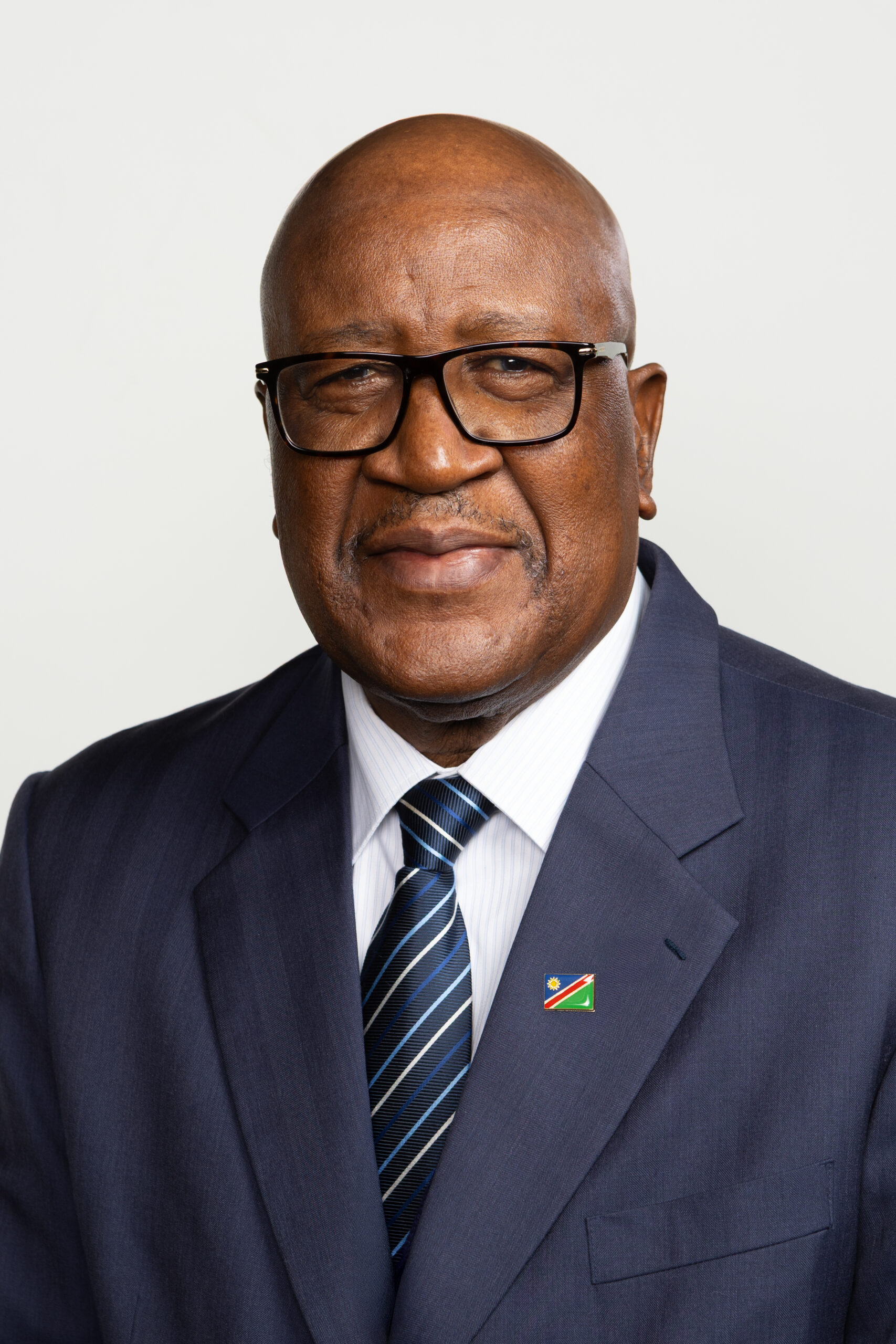
Answers: H.E. Mr Gebhard Benjamin Kandanga
Pictures: Embassy of Namibia in Helsinki, Pexels
 Takaisin uutiset-sivulle