


Argentina, Paraguay and Uruguay: Market Opening and Deregulation Create New Opportunities under the EU–Mercosur Agreement

On 1 May, the trade pillar of the EU–Mercosur agreement will enter into force, marking a significant improvement in market access for EU companies in the Mercosur region: Argentina, Paraguay, Uruguay and Brazil. Over time, more than 90% of trade in goods will become tariff‑free. In this article, we take a closer look at the opportunities emerging specifically in Argentina, Paraguay and Uruguay.
After decades of limited economic expansion, Argentina returned to a growth path in 2025, with GDP growth reaching 4.4%. Growth has been driven particularly by agriculture, energy, mining and financial services. Finnish companies are already active in the energy sector, and mining has seen renewed momentum with recent investment announcements in lithium as well as copper, gold and silver. Team Finland actively supports market‑entry activities for Finnish companies in the mining sector.
Beyond the preferential access provided by the EU–Mercosur agreement, Argentina is also deregulating import and export procedures and dismantling non‑tariff barriers. Combined with a growing need to modernize industrial and digital capacity, these developments are expected to translate into concrete opportunities in the industrial sector over the medium term.
Access to capital remains a constraint in Argentina, particularly affecting mid‑sized capital goods investments. At the same time, the country faces substantial infrastructure needs, including ports and road networks. Argentina is also seeking to further leverage its nuclear expertise, both in nuclear fuel production and the development of new reactor technologies.
Argentina holds significant long‑term potential in forestry, supported by large areas of forest plantations. Team Finland is closely monitoring developments in the sector with the aim of introducing Finnish know‑how as opportunities materialize.
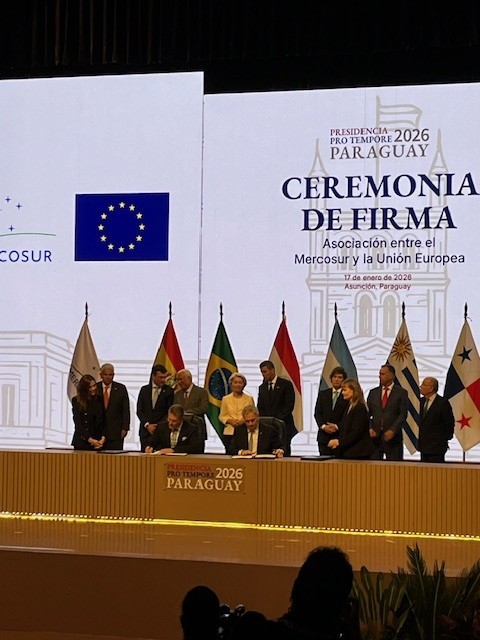
Among the Mercosur countries, Paraguay is currently demonstrating the fastest momentum. Economic growth reached a record 6.6% in 2025 and is forecast to remain above 4% in the coming years. Paraguay positions itself as a regional hub for energy, logistics and forestry. In March 2026, Team Finland organized a business mission to Paraguay with Finnish companies from key sectors including the bioeconomy and forestry, digitalization, energy, machinery and infrastructure. While the domestic market is relatively small, Paraguay’s regional hub role makes it an attractive platform for broader market access.
Uruguay, for its part, has the highest GDP per capita among Mercosur countries. Although economic growth was more modest at 1.8% in 2025, Uruguay offers a stable and predictable business environment. Thanks to major investments in the forestry sector, Finland and Finnish companies enjoy an excellent reputation in the country. In November 2025, the Minister for Foreign Trade, Ville Tavio, led a business delegation to Uruguay focusing on forestry and green hydrogen. Team Finland is also actively promoting opportunities in the circular economy and waste management sectors. In addition, Uruguay’s dynamic software industry represents a growing area of interest.
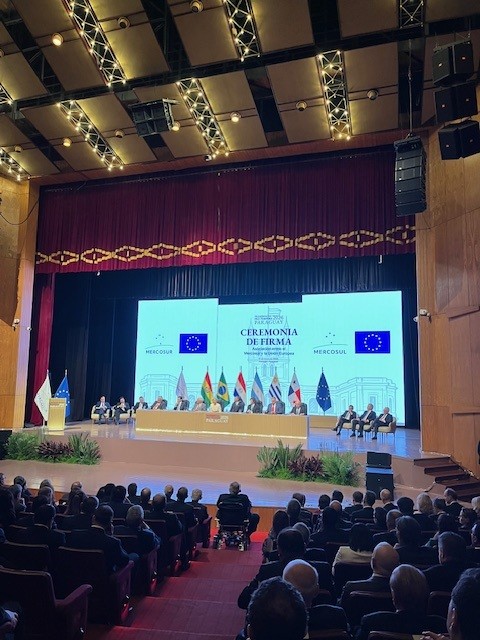
The EU-Mercosur agreement is also expected to have a positive impact on investments in Paraguay, Uruguay and Argentina. The lower tariffs and aligned standards create a framework where companies in Argentina, Paraguay, and Uruguay can scale up exports to Europe. Companies will have an incentive to invest in technology, logistics, and compliance systems to meet EU requirements — which is where Finnish firms, with their strong expertise in industrial technology, automation, and sustainable solutions, can step in:
- Food and agriculture: Demand for traceability, food safety, and sustainable packaging will rise. Finnish companies specializing in agritech, sensors, and digital monitoring could find new customers.
- Forestry value chain: As the area of planted forests expands, so does demand for increased transformation capacity. Finnish technology and know-how are well established and respected in this sector.
- Mining and energy: EU standards on environmental impact and efficiency will encourage Mercosur firms to adopt cleaner technologies. Finland’s strengths in mining equipment, renewable energy solutions, and smart grids are highly relevant.
- Logistics and infrastructure: As trade volumes grow, Mercosur exporters will need better transport, warehousing, and digital logistics systems. Finnish expertise in automation and smart logistics can add value here.
For Finland, the EU-Mercosur agreement isn’t just about selling more products — it’s about embedding Finnish innovation into Mercosur’s modernization process. This creates a win‑win loop: Mercosur countries gain competitiveness, while Finnish firms secure long‑term partnerships and market access.
As part of Team Finland Latin America, we welcome discussions with Finnish companies on an integrated approach to the Mercosur region, leveraging improved overall market access while identifying country‑specific opportunities. Tariffs on machinery have previously ranged from 14% to 20%, and their gradual elimination represents a significant competitive advantage. Food and beverage exports may also gain traction as tariffs of up to 35% are phased out. While Mercosur markets are geographically distant, they share many similarities with Southern Europe in terms of business culture and language, making them closer in practice than they may appear at first glance.
Text: Nicola Lindertz
Ambassador
Embassy of Finland, Buenos Aires
Team Finland Latin America
nicola.lindertz(at)gov.fi
Picture: MFA Finland
 Takaisin uutiset-sivulle