


Easy growth is over, but China still matters
Let me start with a topical update. In China, high level visits play an important role in supporting Finland-China economic cooperation and Finnish companies and their business interests. This year started with an official visit by Finland’s Prime Minister, Mr. Petteri Orpo. He was accompanied by leaders from over 20 Finnish companies. We are building on this momentum and planning other events and visits that we hope are of interest for the Finnish business community. Our goal for September – tbc – is for Finland to participate as the Guest Country of Honor at the China International Fair for Investment and Trade (CIFIT) 2026 in Xiamen. Successful participation would include both ministerial participation from Finland as well as a sizeable number of Finnish companies signing up for the event!
The period of easy growth in China is over. For decades, Finnish companies have benefitted from the opportunities created by the Chinese market. Companies have built strong positions, and in doing so they have contributed enormously to China’s industrial development.
Now the situation has changed, and the current economic environment in China is a paradox of high-quality development and structural economic fragility. After the pandemic, the country has shifted its focus toward technology and advanced manufacturing, often referred to as “new productive forces.” Investment is flowing heavily into these sectors.
The risks have also changed. Geopolitics is playing a bigger role than before but also increased competition by Chinese companies should be taken into account. Chinese companies are internationalizing their operations, and these competitors are no longer mimicking Western technology; they are also improving it quickly and at scale. Besides their scale and agility, the large and highly competitive home market gives them a strong base. When these companies enter the global market, the pressure will be felt on Western companies’ margins. Many Finnish companies are known for excellent quality, but that premium will become a harder sell.
Besides the challenges, we should look at the opportunities as well. First, Finnish key fields of expertise, such as circular economy solutions, smart energy, and industrial digitalization, remain highly relevant. Furthermore, as China’s population ages rapidly, there is a massive, underserved market for sophisticated healthcare and silver-economy solutions.
Second, Finnish companies could see China as a key testing ground for global competitiveness. When competitors in China develop quickly, the only way to keep up is to be present. For some companies, leaving the market to avoid risks also means losing insight into one of the world’s most advanced and competitive environments.
China remains an important benchmark for global competition. Companies that continue operating there, despite the challenges, are more likely to build the capabilities needed to succeed elsewhere.
What does the above mean for the support companies can expect from my organization, the Ministry for Foreign Affairs of Finland, and the Embassy of Finland in Beijing?
This year marks an important structural development for Team Finland. The integration is a long-anticipated step, and we are striving to serve companies even better. FinnCham plays an integral role in Team Finland, and we are cooperating closely with FinnCham China and its Chapters in Beijing, Shanghai, South China and Hong Kong.
For our work to be successful, close engagement by companies is needed. I am looking forward to the continuation of excellent cooperation with FinnCham, Finnish companies and other actors, contributing to Finland’s and China’s economic relations.
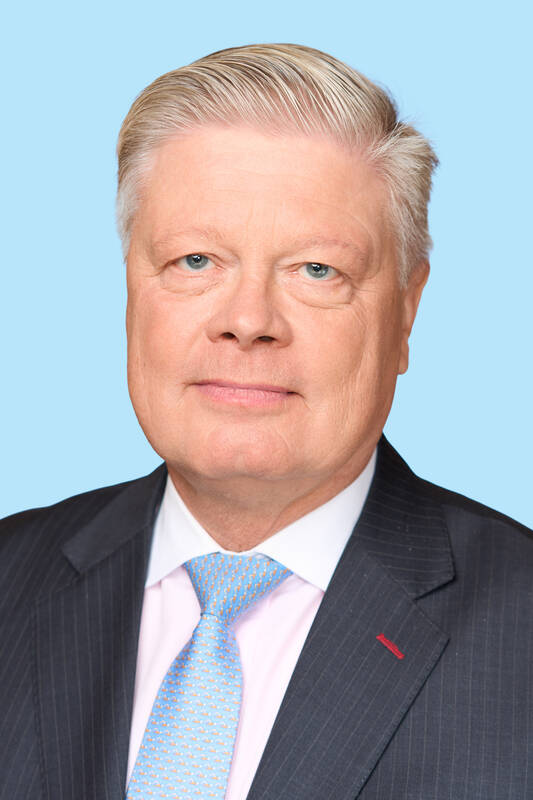
Text: Mikko Kinnunen, Ambassador of Finland in Beijing
Picture: Ministry for Foreign Affairs of Finland
 Takaisin uutiset-sivulle