


Smart Manufacturing and AI Insights Bring Finnish and Estonian Companies Together in Tallinn
A Finnish-Estonian seminar day in Tallinn on 4 November 2026 brought together business representatives and experts to explore the future of smart manufacturing, artificial intelligence and industrial cooperation between Finland and Estonia.
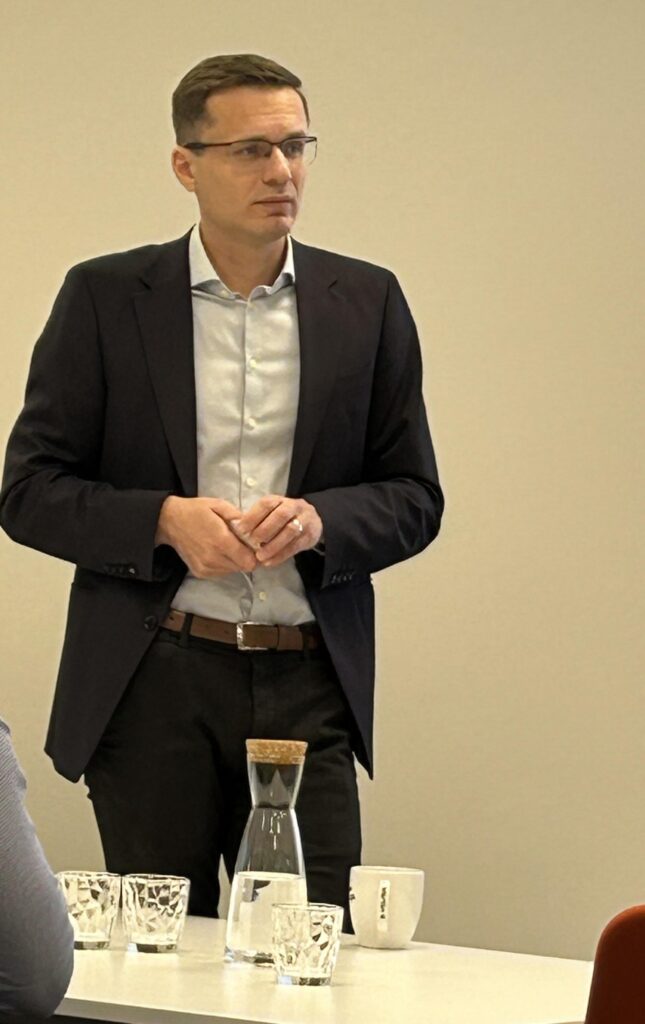
The day began with a company visit to Tech Group, a provider of industrial engineering, machine building and factory automation solutions.
“We make machines happen,” said Martin Sutrop, CEO of Tech Group AS, during his presentation.
The visit provided participants with an opportunity to learn more about the company’s operations and see its manufacturing environment first-hand.
More information: Tech Group
Economic outlook and opportunities for Finnish companies
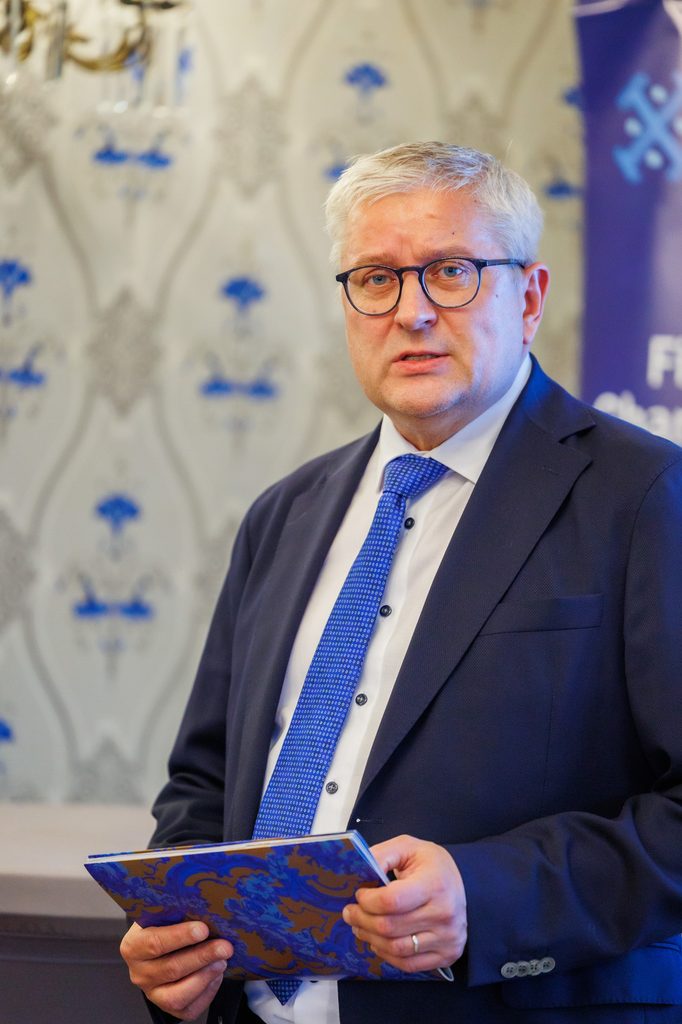
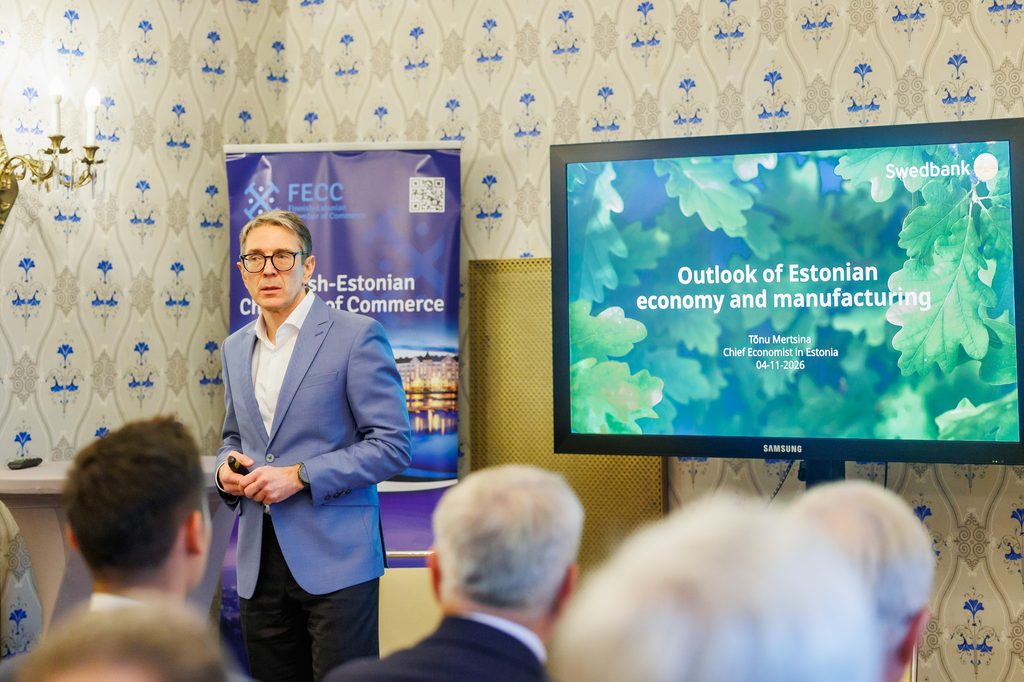
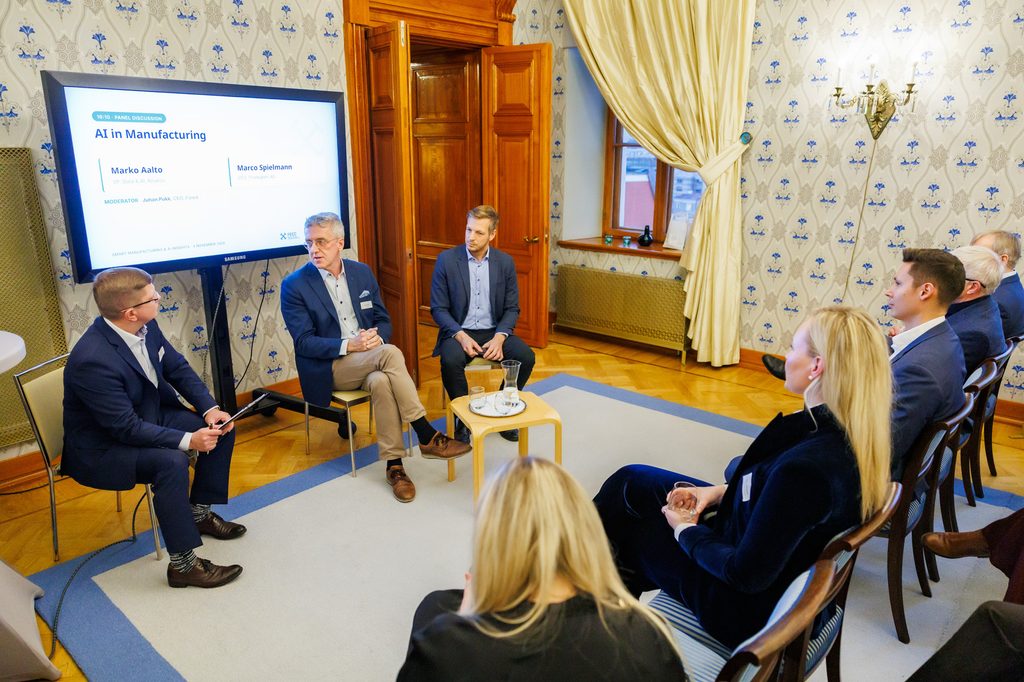
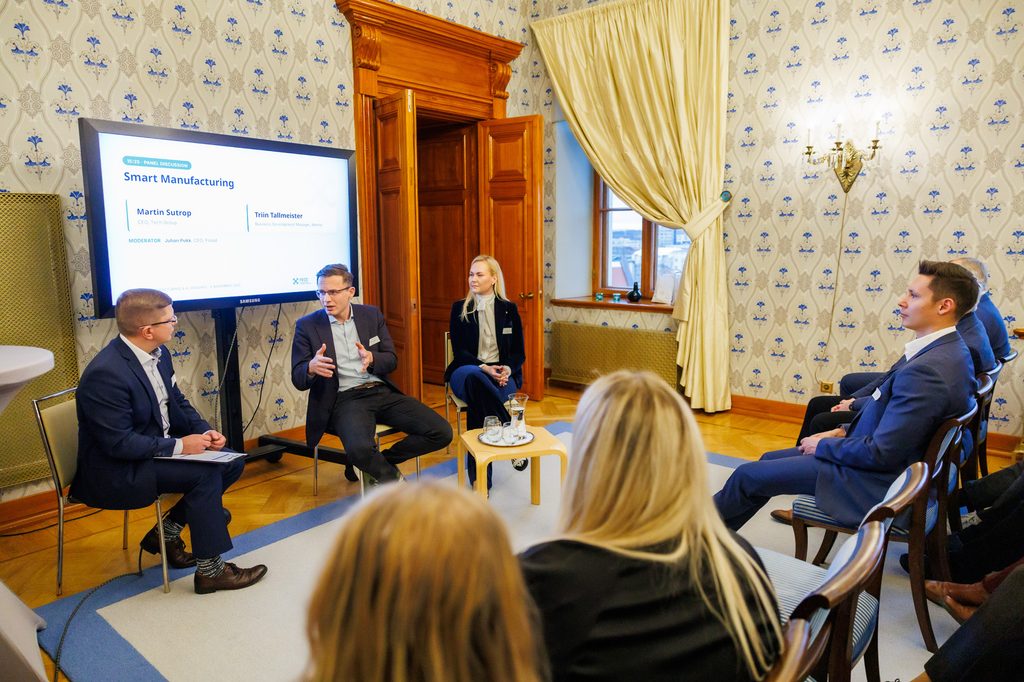
In the afternoon, participants gathered at the Embassy of Finland in Tallinn for the Smart Manufacturing & AI Insights seminar. The event was opened by Ambassador Hannu Heinonen, followed by a presentation by Tõnu Mertsina, Chief Economist, Macro Research Baltics at Swedbank AB Estonian branch. The programme continued with two panel discussions focusing on Smart Manufacturing and AI in Manufacturing.
The economic overview highlighted encouraging signs in the Estonian economy. GDP expanded by 2.3% during the first three quarters of 2026, and confidence in the industrial sector is improving. At the same time, manufacturing growth remains sluggish and export growth has slowed. Private consumption is showing solid growth, while unemployment is declining.
Automation and digitalisation are also gaining greater weight in companies’ investment budgets.
One important message for Finnish companies was the increasing interest among Estonian companies in finding business partners in Sweden, Norway and Germany. This should serve as a wake-up call for Finnish companies and encourage them to strengthen their presence and partnerships in Estonia.
AI must move from discussion to practical use
A central message from the AI discussions was clear: companies should start experimenting with AI rather than simply discussing its possibilities.
Employees are already developing new ways of using AI in their daily work. Companies can support this bottom-up innovation by creating an environment that encourages experimentation, learning and the sharing of successful solutions. Improvements achieved through AI should also be recognised and rewarded, helping employees see how technology can make their work more meaningful and effective.
Ultimately, AI should support higher productivity and greater efficiency. But the discussion needs to go further: how can AI help companies grow, create more business, and develop entirely new business models?
Preparing people and organisations for change
AI will change both organisations and the way work is done. This makes people and change management just as important as the technology itself.
Employees have very different levels of AI knowledge and readiness. Some already use AI confidently, while others may lack the necessary skills or be concerned about how AI will affect their jobs. Companies therefore need to communicate clearly about the opportunities AI can create and provide employees with the necessary training and support.
Organisations also need a clear vision of where they want to go with AI. They should understand their employees’ capabilities and readiness for change, determine which tools are appropriate for different purposes, and establish clear principles concerning confidentiality, data use and security.
Training and continuous communication will be crucial to ensuring that AI is adopted safely and successfully.
Competitiveness, data, and cooperation
Manufacturing may still be somewhat more conservative in adopting AI than some other sectors, but companies do not have to make the journey alone. They can begin developing solutions internally or seek external expertise where needed.
At the same time, companies need to consider carefully how their critical data is managed. Outsourcing essential data or AI capabilities can create dependencies and potentially affect future access to strategically important information. Companies therefore need to consider data ownership, competitiveness, and business continuity, including having alternative solutions where necessary.
Although the unit cost of AI technologies has fallen, rapidly growing demand and expanding use can still lead to higher overall monthly costs. Companies should therefore pay attention not only to adopting AI, but also to how it creates measurable business value.
Finland and Estonia can learn from each other
Perhaps one of the most important conclusions of the day was the value of stronger cooperation between Finnish and Estonian companies.
Companies on both sides of the Gulf of Finland face many of the same questions concerning AI, automation, productivity, skills, and organisational change. By exchanging experiences and practical solutions, companies can learn from each other and avoid repeating mistakes that have already been made elsewhere.
Finland and Estonia have an excellent opportunity to combine their expertise in manufacturing, technology, and digitalisation. Greater cooperation can help companies on both sides accelerate innovation, improve competitiveness and identify new business opportunities.
The seminar was co-organized by the Finnish-Estonian Chamber of Commerce and the Finland-Estonia Business Association.
Anne Hatanpää, Secretary General, Finland-Estonia Business Association
Pictures: Arno Mikkor and Anne Hatanpää (Tech Group)
 Takaisin uutiset-sivulle