


The Gulf Is Buying. Finland Isn't Selling.
What Gulf buyers assess before they commit, and where Finnish companies misread the process.

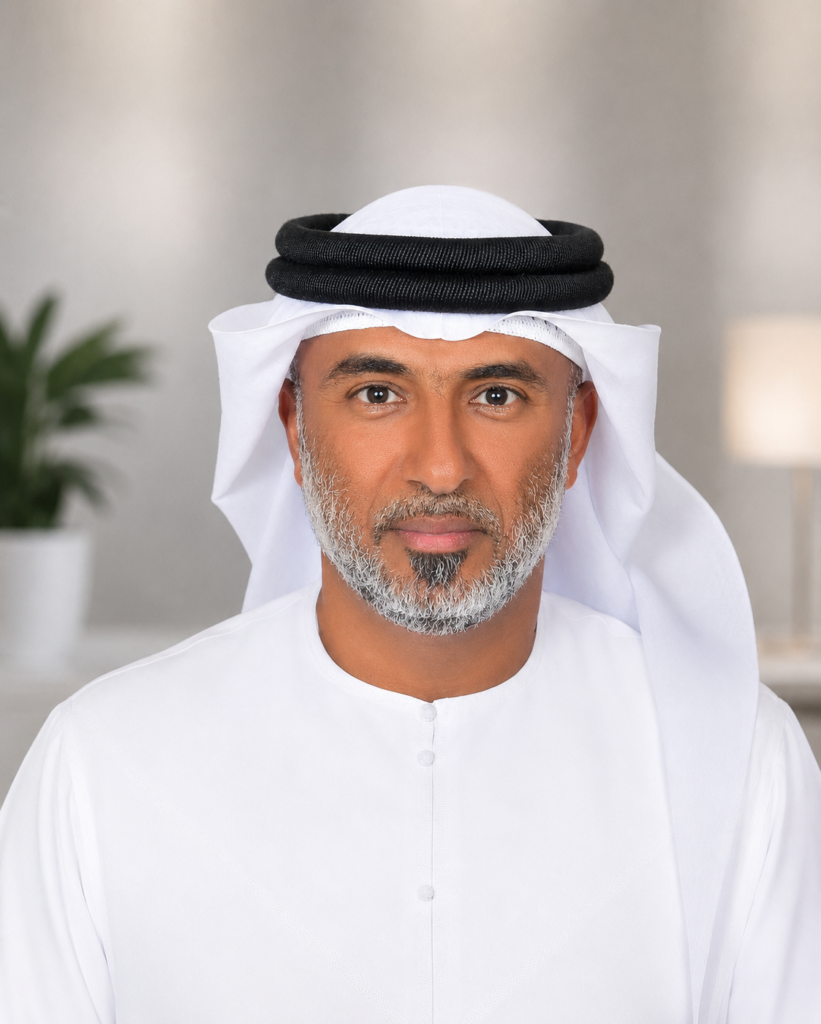
By Haniya Zawar and Mohamed AlBlooshi
Finnish companies are losing Gulf contracts they should be winning. The problem is rarely the product.
We write as a Finnish-Emirati team involved in this commercial work ourselves. Haniya is Finnish, with 25 years building and operating businesses across Europe, the Middle East and Asia. Mohamed is Emirati and has spent much of his career on the buying side — senior roles in utilities, aluminium, renewables, telecommunications and the UAE Air Force — assessing foreign suppliers from inside the organisations Finnish companies want to approach. Through Zarwa Global, we work with Nordic and European companies entering Gulf markets, including Novus Rescue, a Finnish emergency-response technology company.
Security is often the first question raised in Finland. Headlines give an incomplete picture: meetings are held, tenders move, projects are delivered. The sharper issue is commercial performance, which trails Finland’s technical reputation in the region.
Start with the published plans
Finnish boards sometimes dismiss Gulf development plans as announcements. Some scepticism is healthy. But the useful work begins with four questions: which priorities have budgets, which authority owns the requirement, what qualifications will suppliers need, and when does procurement begin?
Saudi Vision 2030, We the UAE 2031 and UAE Centennial 2071 set broad direction. The practical work is identifying which priorities translate into actual buyers, budgets, programmes and procurement routes. Many sit in sectors where Finnish industry is already credible: civil defence, water, energy, industrial automation, health, education and digital government.
Most exporters arrive after an opportunity has become visible. By then, vendor registration may be under way, specifications taking shape and local relationships already formed. We prefer to start earlier: identify the buyer, the route into procurement and the evidence needed to qualify.
The opportunity extends beyond the UAE and Saudi Arabia. Qatar, Kuwait, Oman and Bahrain each have their own regulators, procurement systems and commercial culture. A partner’s access in Dubai rarely extends to Doha; a qualification in Kuwait may carry no status in Muscat.
The picture changes within countries too. Abu Dhabi concentrates energy, utilities and large government-linked procurement; Dubai is a centre for trade and regional headquarters; Sharjah has substantial industrial and education activity. Relationships built in Riyadh do not automatically transfer to Jeddah or the Eastern Province. Localisation, in-country support and corporate presence can affect eligibility, particularly in government work.
The Gulf is therefore not one market. Market entry starts with a specific country, region, buyer and route into procurement — not with a map of “the Gulf”.
The sequence is the sale
When Finnish companies lose in the Gulf, the cause is usually the sequence around the product.
A Finnish sales discussion begins with specifications, certifications, references and price; the relationship is expected to follow once the product proves itself.
Gulf buyers often assess the company and its representatives from the outset, alongside the technology. Who can make a decision? Who takes responsibility when something goes wrong? How does support work locally? Will the people in the first meeting still be involved a year later?
Technical credibility earns attention. The buyer then tests whether the organisation can deliver and remain accountable.
Trust often sits with individuals as much as institutions. A change of regional representative can erase context, interrupt access and force the buyer to re-explain the history. A staffing decision made in Helsinki can undo months of patient work in the market.
The first meeting decides what happens next
The purpose of the first meeting is to earn a serious second one. The purchase decision comes later, but the assessment begins before the presentation.
Who attends from your side? Does their seniority match the people receiving them? Can they answer, decide and commit, or must every point be referred back to Finland?
The conversation may take time to reach the formal agenda. Finnish executives can be tempted to steer everyone back to the slides. Resist that. The buyer is learning how you listen, how you handle the room and whether a longer working relationship feels possible.
Dress, greetings and hospitality matter too, with some markets, particularly Saudi Arabia, generally expecting greater formality.
The goal is not to abandon Finnish directness. It is to understand how it is being received.
Your material travels without you
Finnish presentations are strong on product: technology, certification, testing, price and sustainability. Gulf buyers may also ask who stands behind the company, who supports the product at three in the morning, where spare parts come from and how quickly help arrives.
The document shown in the meeting will later reach procurement, technical teams, finance, legal, senior management — perhaps a government stakeholder. Those readers missed your explanation. The material must stand on its own.
Finnish companies also tend to hide their people. The product appears on every page; the founders and delivery team are confined to a box at the end. In the Gulf, the people with authority and responsibility are part of the offer. Buyers want to know who built the company, who will manage the account and whether that person has worked in comparable conditions.
Review material for cultural meaning before it is used: photography, clothing, humour and political references can all carry unintended messages. Check names too — a Finnish product name may transliterate badly into Arabic. When Arabic is required, use a professional translator who understands the subject; literal translation creates avoidable risk around technical language and commercial commitments.
Assume every document will be forwarded and quoted without you present.
Reading “yes”
European companies often tell us an Arabic speaker is unnecessary because the meeting will be in English. English solves the problem of a common working language — and nothing more.
“Yes” can signal full agreement or simple acknowledgement. “We will consider it” can mean an active option, a need for internal discussion or a courteous indication that the timing is not right. Silence may reflect disagreement, uncertainty, respect for seniority — or simply the sense that the discussion remains open.
Finnish directness is usually intended as efficiency and respect. In another setting, the same wording can sound aggressive, particularly when criticism is delivered in front of colleagues.
The answer is not to analyse every word in isolation. Test the commitment through the next action. Who will review the proposal? Which department needs to be involved? What information is required? When should the next meeting take place?
This is where cultural intelligence becomes a commercial skill rather than a matter of etiquette.
Arabic matters most around government correspondence, tenders and contracts, and in the conversations either side of formal meetings. A Finnish company would expect a foreign supplier to learn Finnish procurement culture even when everyone speaks English. Gulf buyers deserve the same care.
Our Finnish-Emirati pairing exists to catch these gaps early: we explain the buyer’s intent to the Finnish board, and the Finnish company’s real delivery capacity to the buyer. A difference in interpretation can determine whether the next step happens at all.
When to ask for the decision
One contact, general questions and no introduction deeper into the organisation usually mean it is too early to push. Asking for a contract at that stage signals that you are rushing the transaction.
The conversation turns serious when new functions join, questions shift to implementation, and the buyer asks about service response, integration, training, local support or commercial terms. If your counterpart begins arranging the next step without being pushed, the proposal is likely moving internally.
If the same people keep repeating the same discussion, the opportunity may have stalled, and a harder sales push rarely fixes it. The relationship may need rebuilding, or the proposal may need a smaller first commitment. A defined pilot or technical assessment can be easier to approve than a large framework agreement.
These signals are difficult to read from Finland, which is one reason experienced local representation matters.
Choose the customer before the licence
Many companies begin with formation because it feels concrete: choose a free zone, obtain a licence and open an office. Problems emerge later when that entity cannot transact with the intended customer or support the business model.
Begin with the customer and the contract. Who buys? How do they procure? Who imports and invoices? What must be supported locally? Does the customer require a mainland supplier, a registered vendor, a distributor or an industrial presence?
The answers should determine jurisdiction, licence, activities and ownership structure — not the other way around.
Contracts need the same local attention. Payment terms, retention, performance guarantees, liability, intellectual property, exclusivity and localisation obligations all have practical consequences. Agency and distribution agreements deserve particular care: rules on registration, termination, exclusivity and compensation differ between Gulf countries.
International counsel should protect the company’s wider position; local counsel should explain how the agreement will actually work and be enforced. Settling these questions before signature is far cheaper than repairing the consequences afterwards.
Funding follows the customer case
The UAE and Saudi Arabia offer incentives for companies that bring meaningful activity into their markets, but the relevant option depends on sector, location, investment and local activity. Formation cost alone is a poor basis for the decision.
The region also has capital: family offices, industrial investors and sovereign-linked organisations. They expect evidence of demand, credible management, customer access and a workable regional model. A credible customer case should exist before an investor introduction carries real weight.
The practical first question
For a Finnish board considering the Gulf, the first discussion should be practical.
What exactly are you selling?
Who buys it?
In which country?
Through what procurement route?
Who supports it locally?
Once those answers are clear, the company can decide where to invest its time and money.
Finnish companies arrive with credible technology and a reputation for keeping their word. Gulf buyers value both, and the region is an excellent market for Finnish companies with strong technology and specialised expertise.
But credibility alone does not open the door.
Converting it into business requires more than a flight to Dubai and a pitch deck in a suitcase. Opportunities open through the right relationships and introductions, early engagement with the buyer, an understanding of how decisions are made, and the ability to show that you can deliver and remain accountable locally.
The opportunity is there.
The question for Finnish companies is whether they arrive early enough to help shape the decision, or only in time to respond to it.
⸻
Haniya Zawar is Finnish and based in the UAE. She has spent her career building start-ups and scaling international trade, including nearly 17 years leading FHC Ltd across Nordic and European markets. She is Co-Founder and Chief Operating Officer of Zarwa Global FZ-LLC and Chief Commercial Officer for the GCC entry of Novus Rescue Oy, drawing on her frontline emergency response experience. Her forthcoming book, Fluent in the Room: Cultural Intelligence as Strategic Advantage, examines how culture shapes cross-border business.
Mohamed AlBlooshi is an Emirati senior executive and strategic adviser. He is Chief Business Development Officer for the GCC entry of Novus Rescue Oy and Executive Business Development Director at Refratechnik Ceramics. He was previously Vice President of Supply Chain at Etihad Water and Electricity and held senior strategic sourcing roles at Emirates Global Aluminium, with earlier positions at Masdar, Thuraya Satellite Telecommunications and the UAE Air Force. He holds an MBA from Abu Dhabi University.
 Takaisin uutiset-sivulle