


Serbia as an Operating Environment for European Principals
A Practitioner’s View — for the Finnish Business Community
By Dragan Beljić, Senior Commercial Manager (Belgrade)
Why Serbia, why now
Serbia sits at the geographic and commercial centre of Southeast Europe. With a population of roughly seven million, it punches above its weight as a regional hub: it is the only country in Europe with free-trade agreements simultaneously linking the European Union, EFTA, CEFTA, the Eurasian Economic Union, Turkey and the United Kingdom. From a manufacturing or logistics base in Serbia, a foreign principal can serve a market that is multiples of the country’s own size, often under preferential terms.
The German business community has understood this for decades. A long-established and substantial German presence — from family-owned automotive suppliers to multinational engineering firms — has shaped the country’s commercial culture and produced a generation of professionals fluent in the standards and rhythm of West European business. It is on this backdrop that Finnish companies — whose engineering, cleantech, forestry and ICT strengths align well with Serbia’s industrial base — can build a credible operating presence with relatively modest entry investment.
This note offers a practitioner’s view of what such a presence actually looks like on the ground.
The contractual landscape
Serbia operates under a civil-law system shaped historically by German and Austrian commercial tradition, modernised through successive reforms aligned with the EU acquis. For a Finnish company drafting a supply, distribution or agency arrangement, this means three practical things.
First, ICC instruments are well understood. Incoterms® 2020 are routinely applied; documentary letters of credit and bank guarantees are familiar to all major Serbian banks; ICC model contracts (sale, agency, distributorship) circulate freely among practitioners. A Finnish exporter using these instruments in dealings with a Serbian counterparty will not be encountering a foreign legal universe.
Second, dispute resolution requires forethought. While Serbian commercial courts function, international parties almost universally prefer arbitration — whether through the Foreign Trade Arbitration at the Chamber of Commerce and Industry of Serbia in Belgrade, or through Vienna, Paris or other neutral seats. Defining the dispute-resolution clause carefully, in advance, is one of the few decisions that genuinely cannot be repaired later.
Third, contracts must be precise. There is a tendency in Balkan business culture toward reliance on personal trust and verbal commitment. This is genuine and worth respecting in the relationship-building phase — but for the document that ultimately governs the deal, ambiguity is the enemy. A Serbian counterparty will respect a tightly drafted contract, even where the negotiation feels initially formal.
The partnership reality
The single most consequential decision a Finnish principal will make in Serbia is the choice of local partner — whether that partner is a distributor, agent, joint-venture co-investor or first key customer. Belgrade’s commercial community is tight-knit, and reputations travel quickly. References from established sources — chambers of commerce, embassy commercial sections, peer companies already operating in Serbia — are reliable and well worth the time required to obtain them.
The good news is that the Serbian commercial register is transparent, ownership structures are traceable, and basic counterparty due diligence is straightforward. The harder, more important work is qualitative: understanding who really decides inside a counterparty organisation, whether the senior figures genuinely back the relationship, and whether the partner has the operational capacity it claims. This is work best done by someone who knows how to read the local commercial landscape.
The regulatory and operational frame
Serbia’s tax structure is notable for its predictability and competitiveness within Europe: a 15% corporate income tax, 20% VAT, and a 10% personal income tax that is among the lowest in the region. Free-trade zones offer further incentives for export-oriented production. The employment framework is more flexible than in Germany, while still providing meaningful employee protections — a reasonable middle ground for foreign employers.
Currency operations are not entirely free of controls, but in practice these rarely impede ordinary commercial activity. Repatriation of profit, dividend payments and routine trade-finance flows function reliably through the established correspondent banking network.
What does occasionally surprise foreign principals is the pace of administrative interaction. Some procedures are now fully digitised and fast; others retain a paper-based legacy that can produce unexpected delays if not anticipated. Local counsel and a competent commercial advisor are not a luxury — they are a routine cost of doing business properly.
Where Finnish companies may find natural fit
Several sectors offer strong alignment between Finnish capability and Serbian opportunity. Cleantech and renewable energy are now actively pursued under Serbia’s EU Green Deal alignment commitments. Forestry, wood processing and pulp benefit from a substantial domestic resource base and an established processing tradition. Industrial automation, ICT services, telecommunications equipment and inland-waterway technology along the Danube corridor all fit naturally with the country’s growing manufacturing and digital sectors.
In each of these areas, the entry path tends to follow a similar pattern: a discovery phase of market and partner orientation; a pilot supply or service contract to test the operational fit; and a framework arrangement once the relationship has proven itself.
A practical closing note
For a Finnish company genuinely evaluating Serbia, the single most useful early investment is a few days of in-country orientation — meeting potential partners, embassy commercial counsellors, the relevant chamber contacts, and an independent commercial advisor familiar with both the Finnish business style and the Serbian operating reality. This is not a market that rewards distance management. It rewards presence, careful counterparty selection and disciplined contracting.
The result, when these elements come together, is a strong regional foothold with access — through Serbia’s unique web of trade agreements — to a market of well over one hundred million people on preferential terms. That is a proposition worth examining seriously.
Dragan Beljić is a Senior Commercial Manager based in Belgrade, with over twenty years of cross-border commercial experience in Serbia and Germany. He is an active member of the ICC Commission on Commercial Law and Practice in Paris (since 2003) and a contributor to four ICC working groups on international trade contracts. Contact: +381 65 236 7080 · dragganb@gmail.com
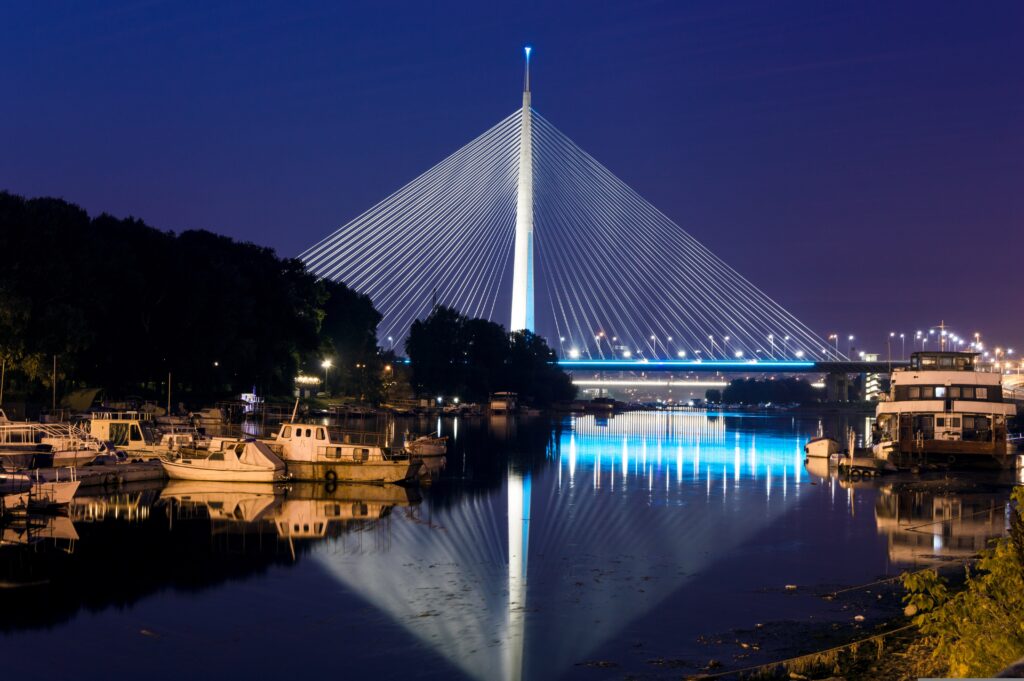
Picture: Pixabay
 Takaisin uutiset-sivulle